1. Context
When demand goes up, our fulfilment centres need higher roster adherence to maintain backend availability of items.
At Blinkit, demand can change dramatically during festivals, weekends, rain and regional holidays.
A surge in customer orders creates pressure across the entire fulfilment system.
More orders mean more work inside the warehouse — picking, packing, sorting and dispatching, while worker availability can become less predictable.
We needed a way to influence worker participation when additional capacity mattered most.
2. The problem
An incentive is only useful if it changes behaviour
The obvious solution was to offer workers additional earnings.
But simply showing “Earn ₹500 extra” doesn’t answer the questions
that determine whether someone will act.
For the workers to behave in a desired manner, they needed their
questions answered:
What do I need to do?
Am I eligible?
How much will I earn?
How much progress I have made?
When will I get it?
Why was there a deduction?
The challenge becomes:
How might we design incentives that turn a business need into a clear, motivating action for workers?
3. Design approach
We designed around the behaviour we wanted to create
We broke the experience into a simple behavioural journey:
Four principles guided the design:
Make the value clear
Show the reward upfront.
Reduce the distance between action and reward
I do this → I earn this.
Make progress visible
People are more motivated when they can see how close they are to completing a goal.
Keep complexity out of the way
The system can handle complications, keep things simple for the workers.
4. Behaviour Design
Discover
Make the opportunity discoverable without
making workers actively search for it.
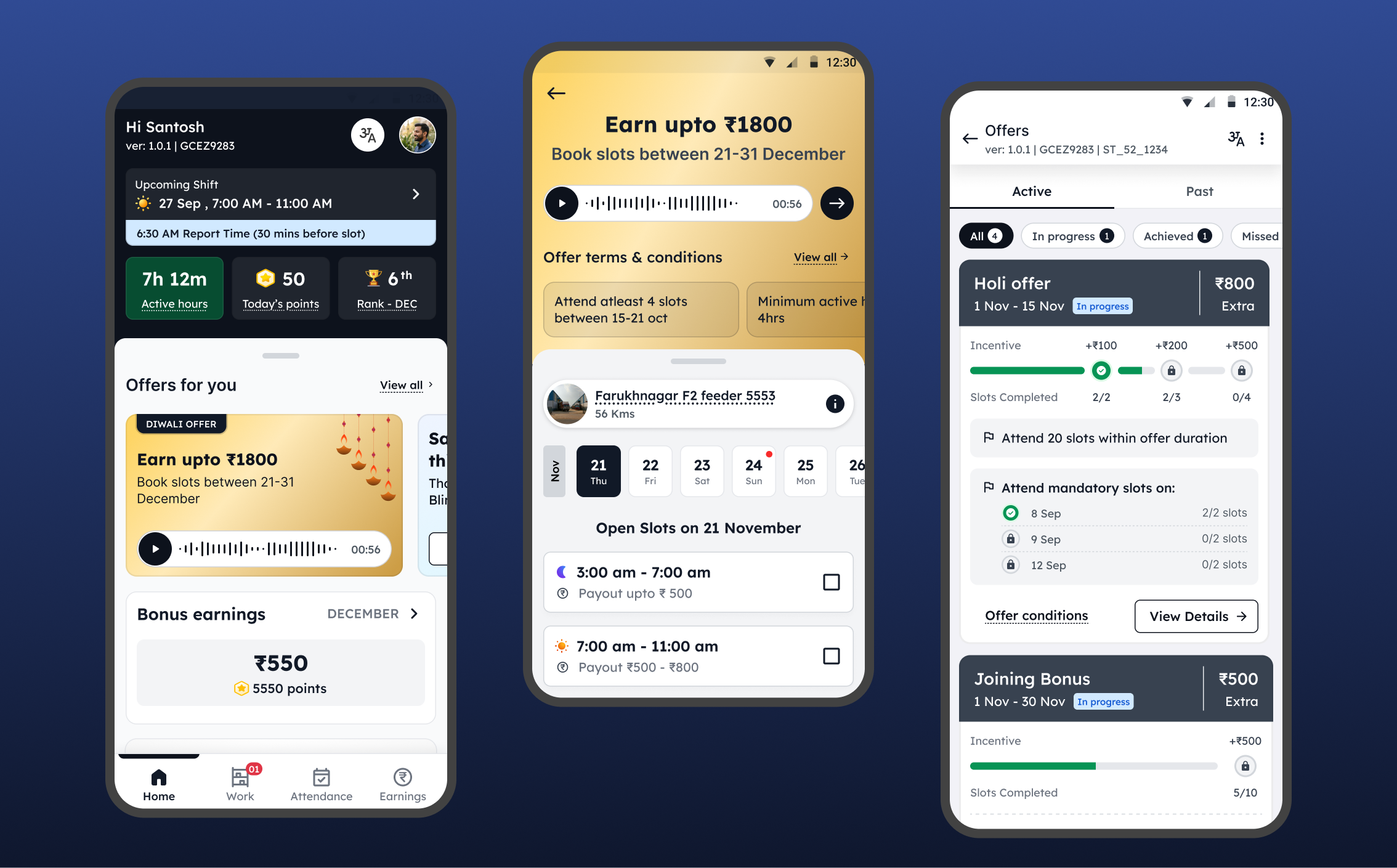
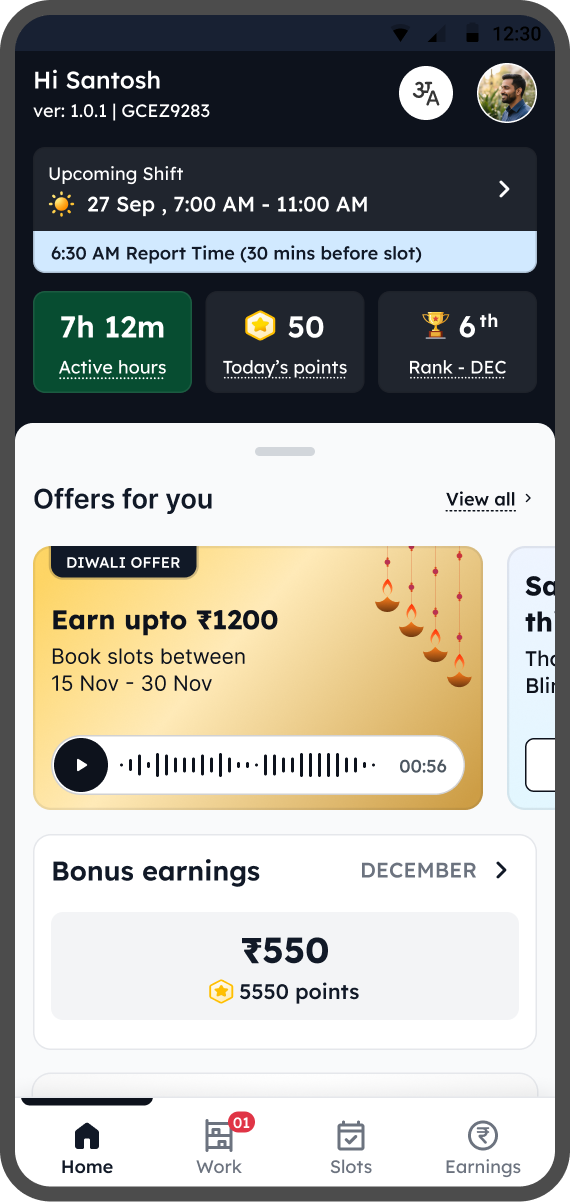
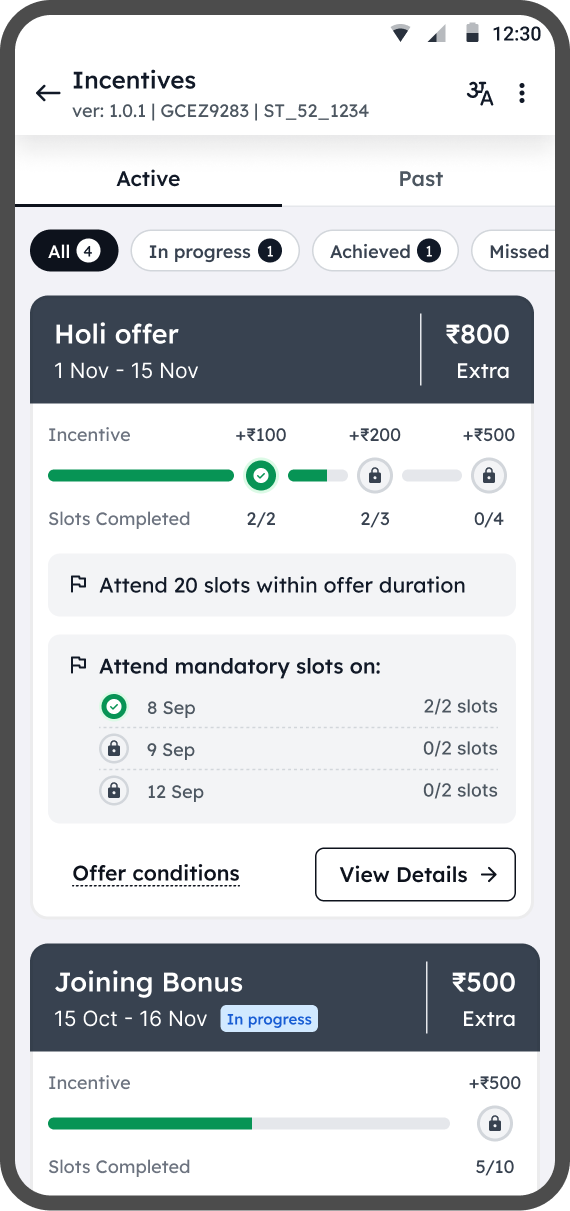
Worker App’s home screen became the discovery space for incentives.
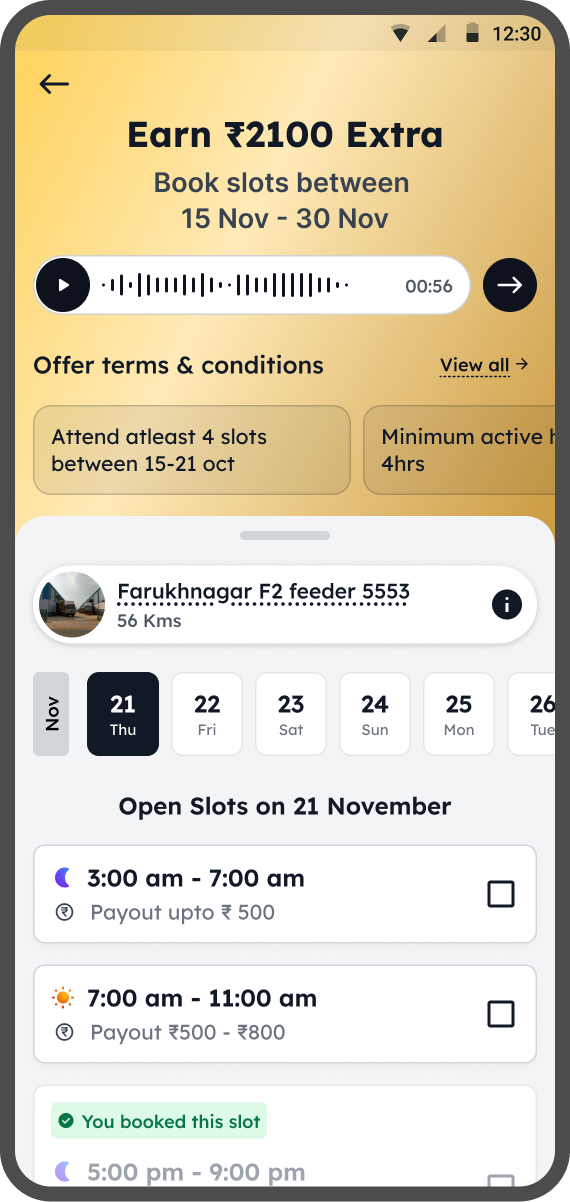
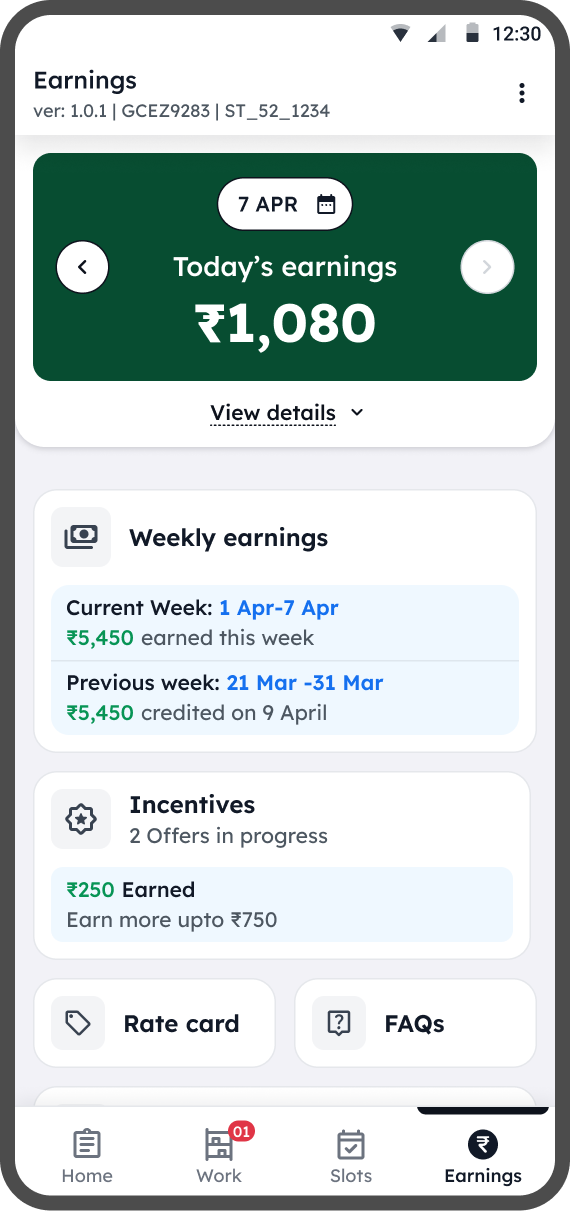
Earnings section, a regularly visited section among workers provides the entry point for active and past incentives to view progress and payout status.
We plan to introduce a dedicated Offers section after successful pilot.
Understand
Reduce uncertainty- People are less likely
to act when the outcome is unclear.
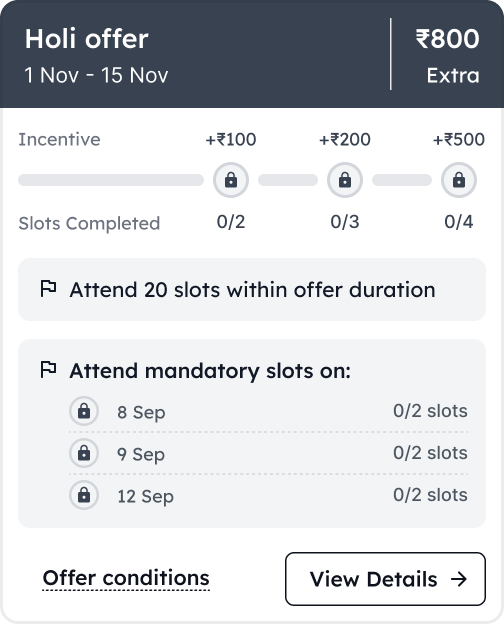
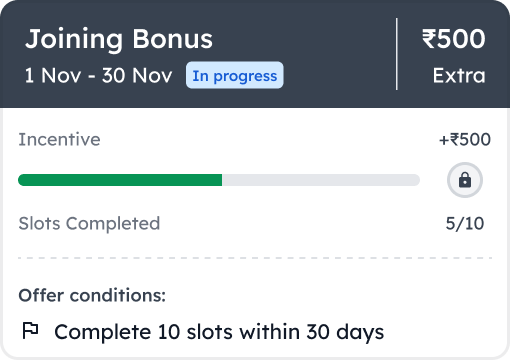
So we made the relationship explicit:
Do this → Earn this
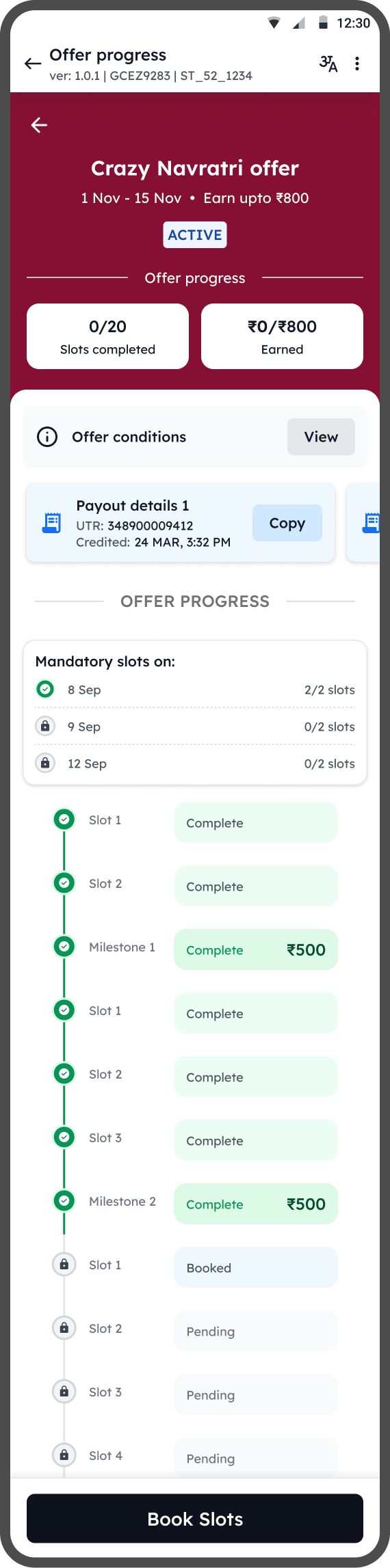
Act & track
Reduce the effort required to decide
The worker shouldn’t need to calculate:
- Which shifts qualify?
- How much can I earn?
- How many shifts do I need?
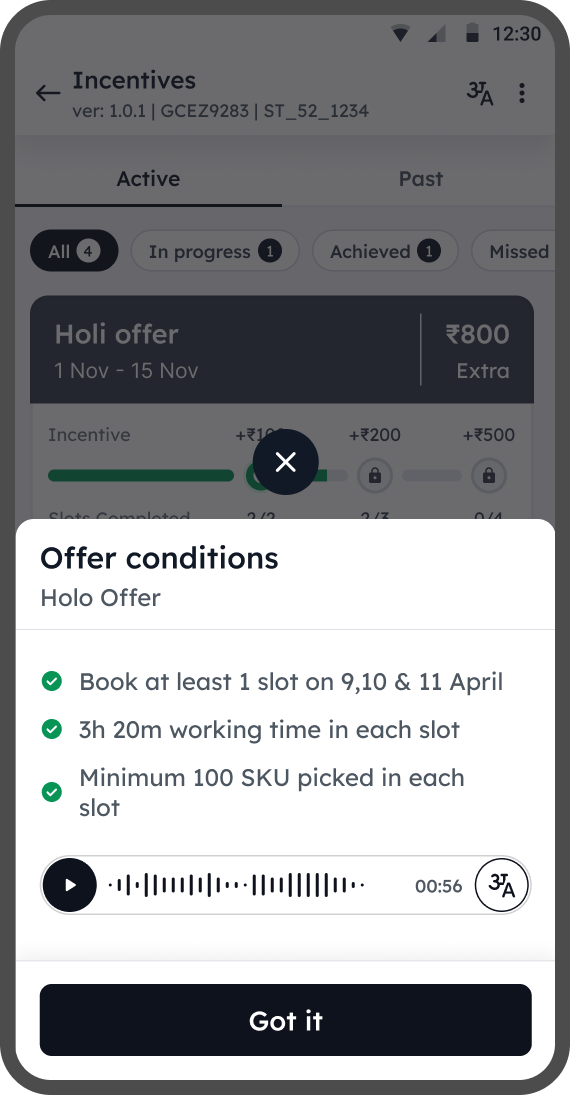
- What conditions apply?
We surfaced those answers directly.
5. Offer creation
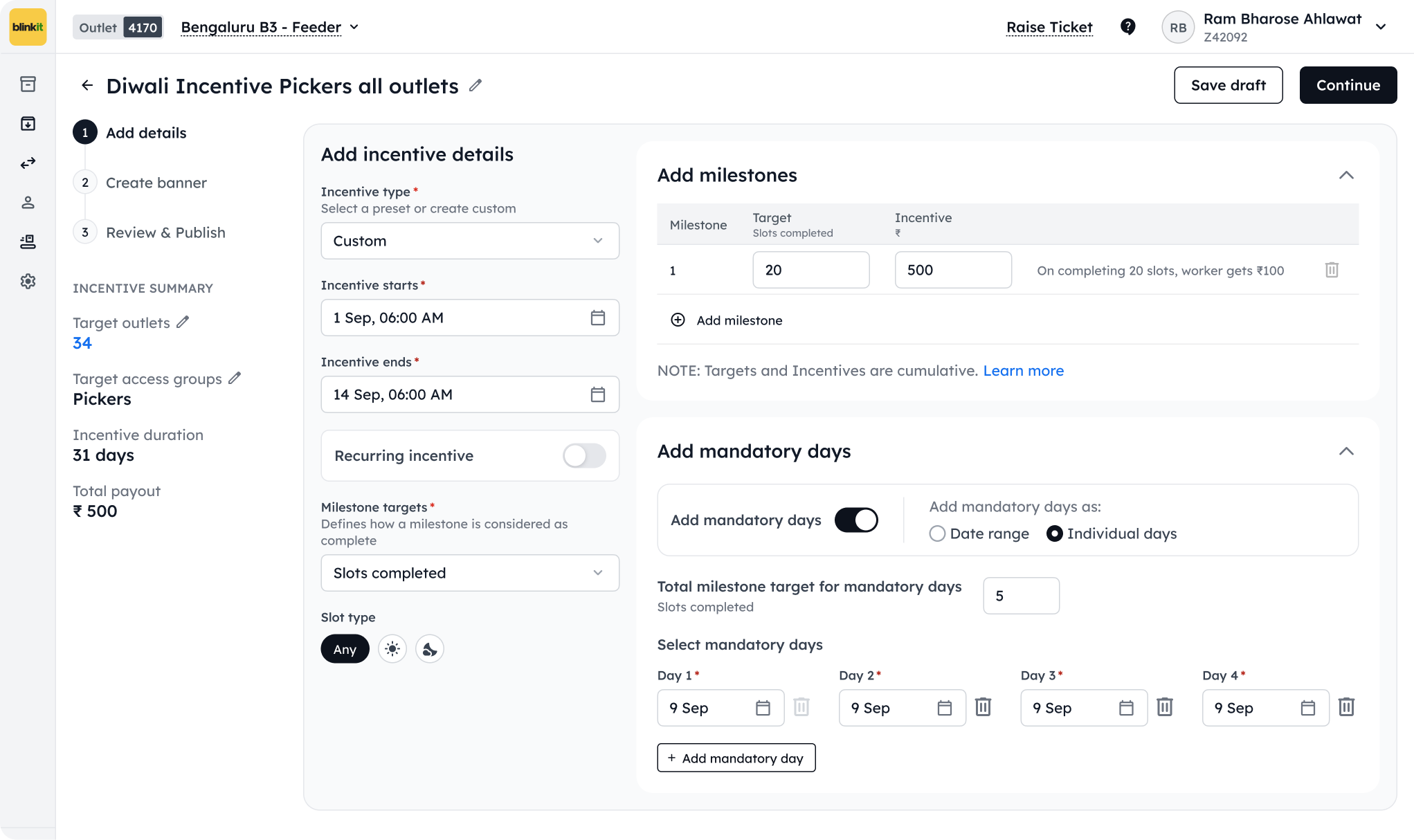
Behind every offer were business rules around:
- Who is eligible
- What behaviour is required
- Which shifts count
- What performance is expected
- How much is paid
- When the offer starts and ends
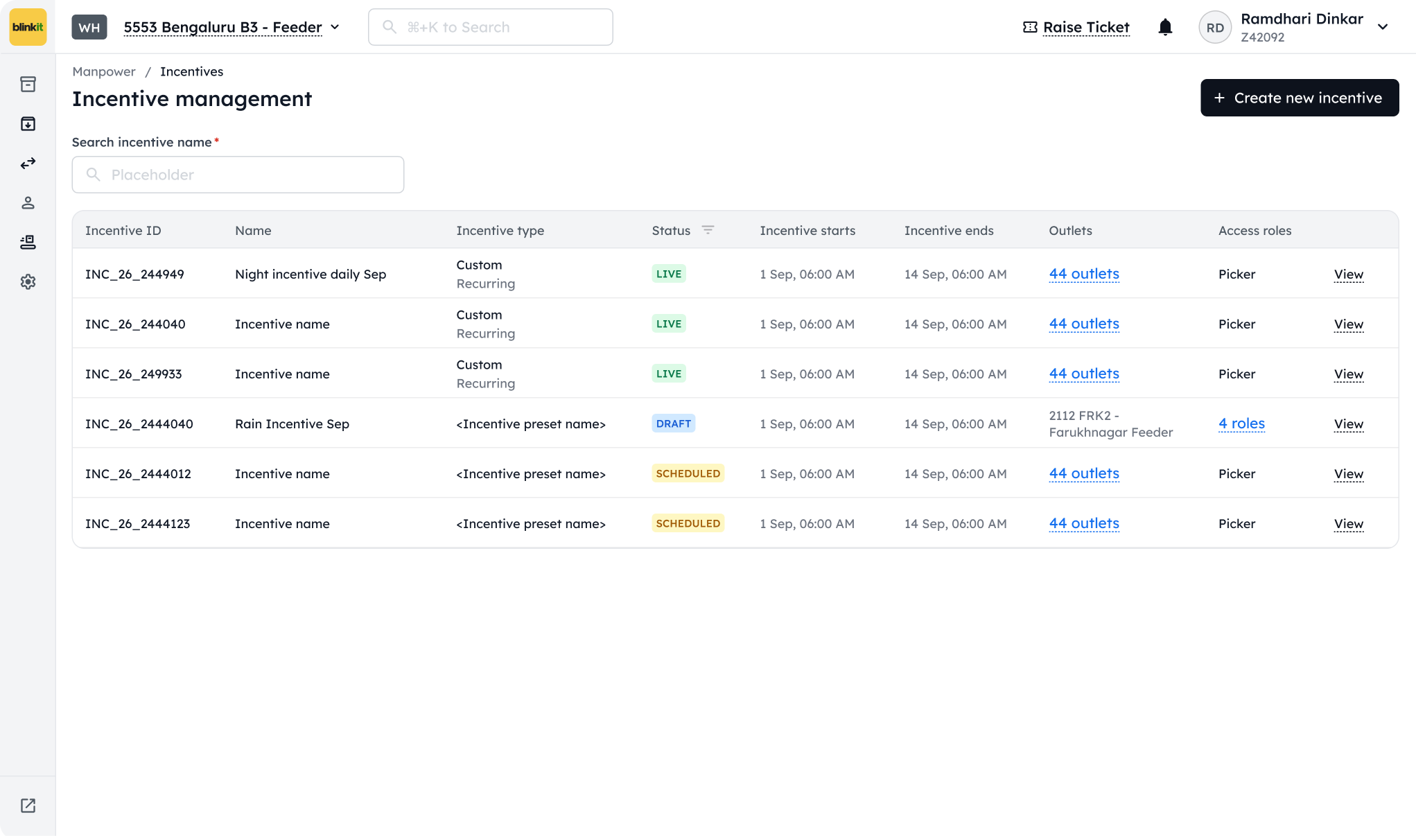
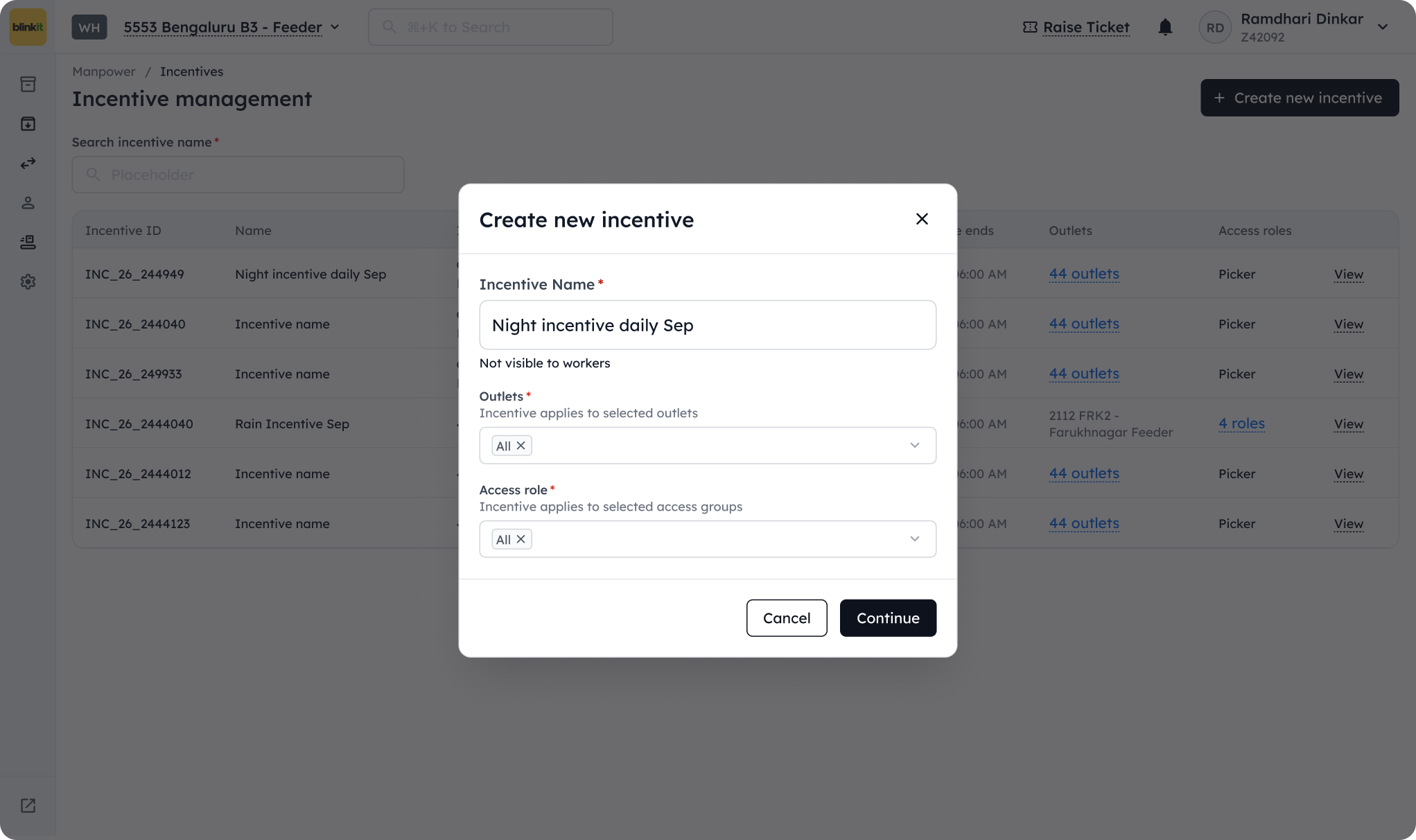
We created an offer configuration dashboard for central business team.
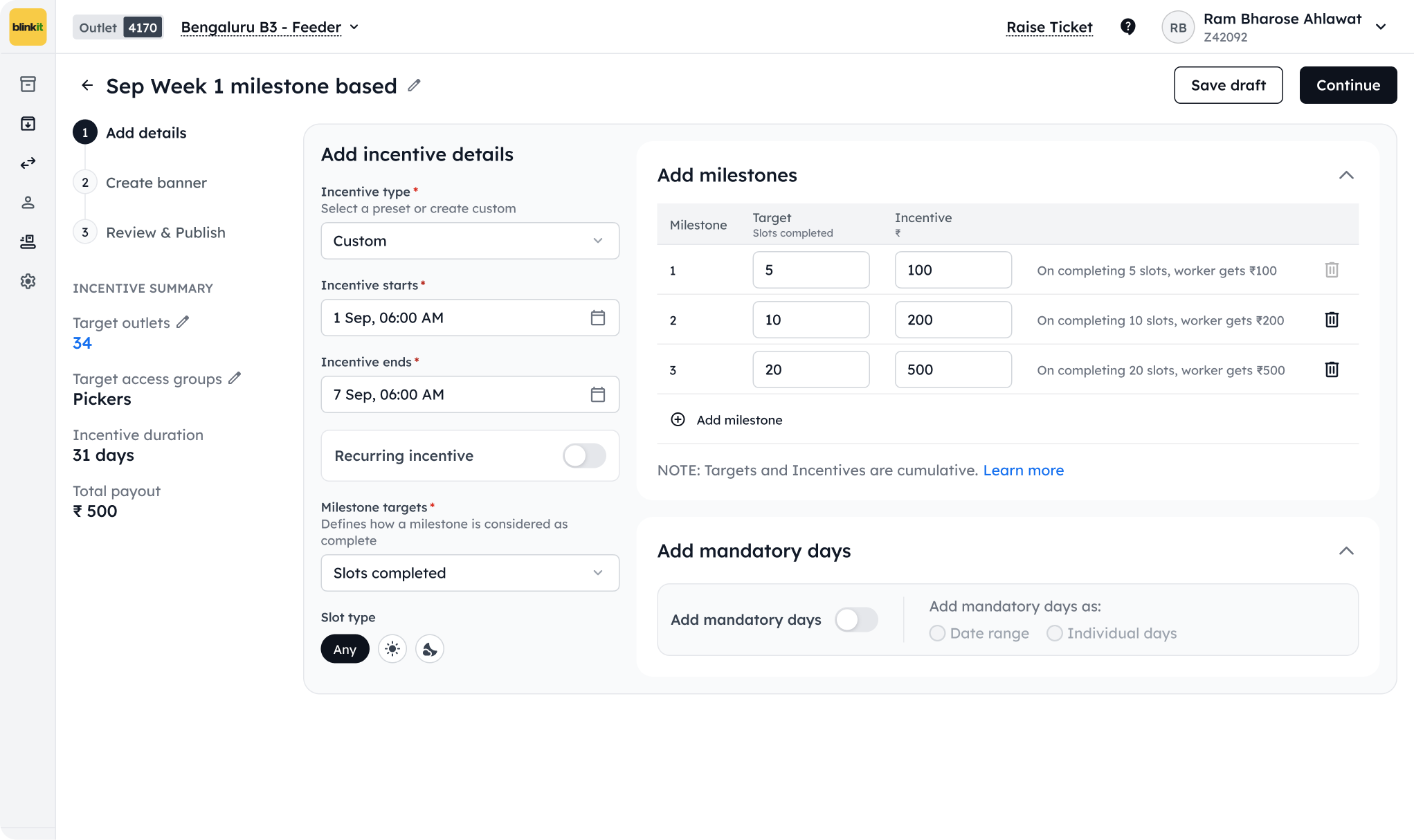
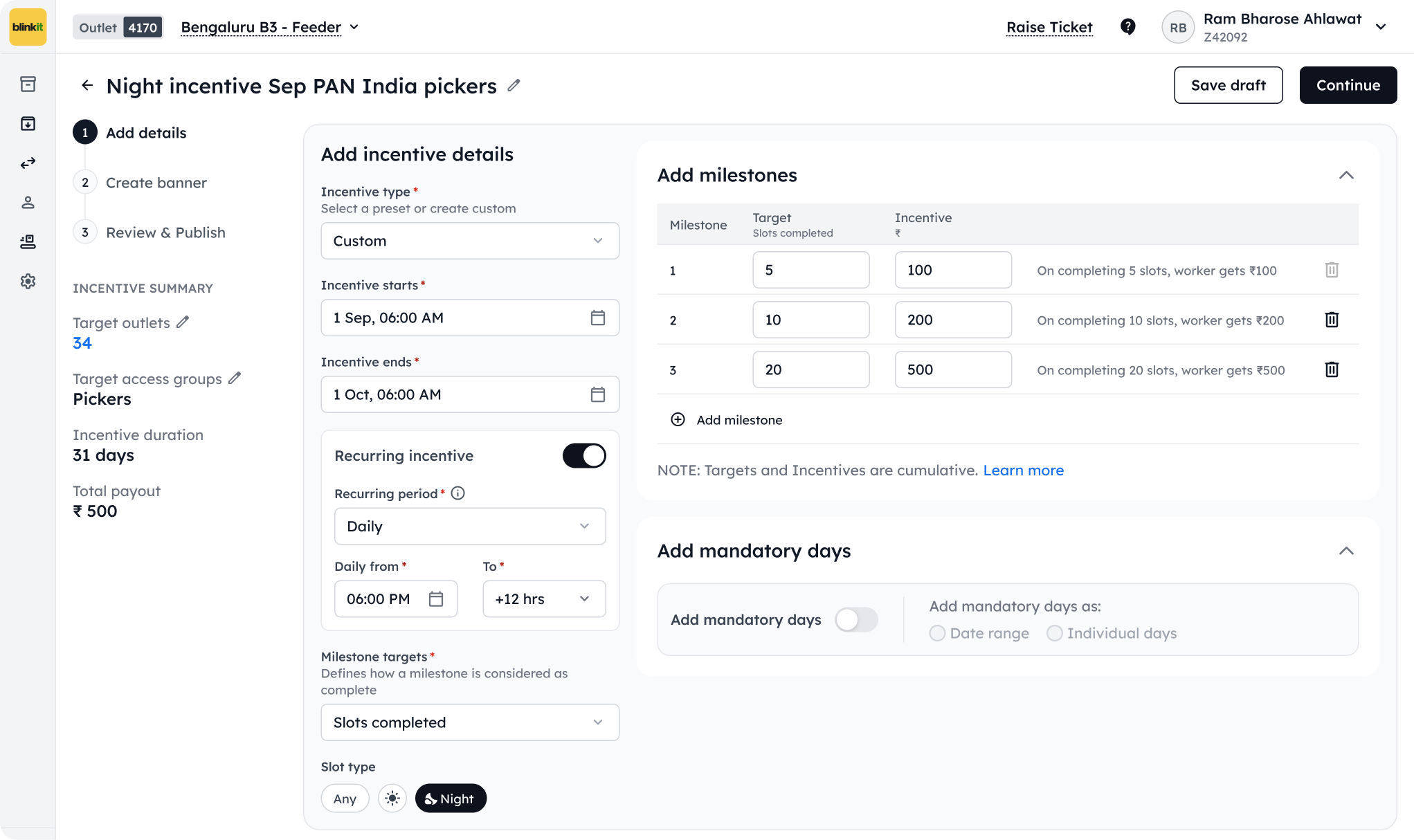
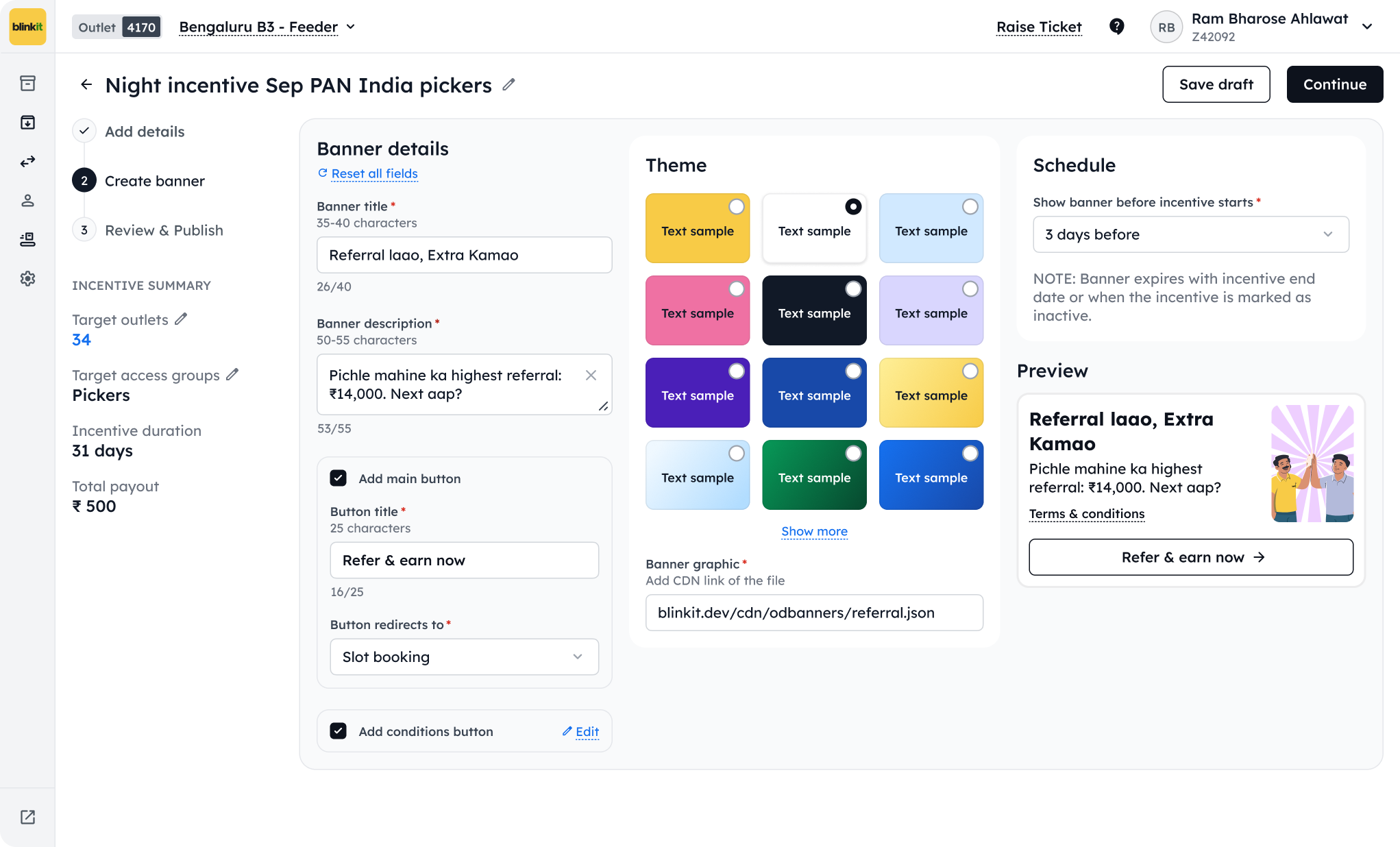
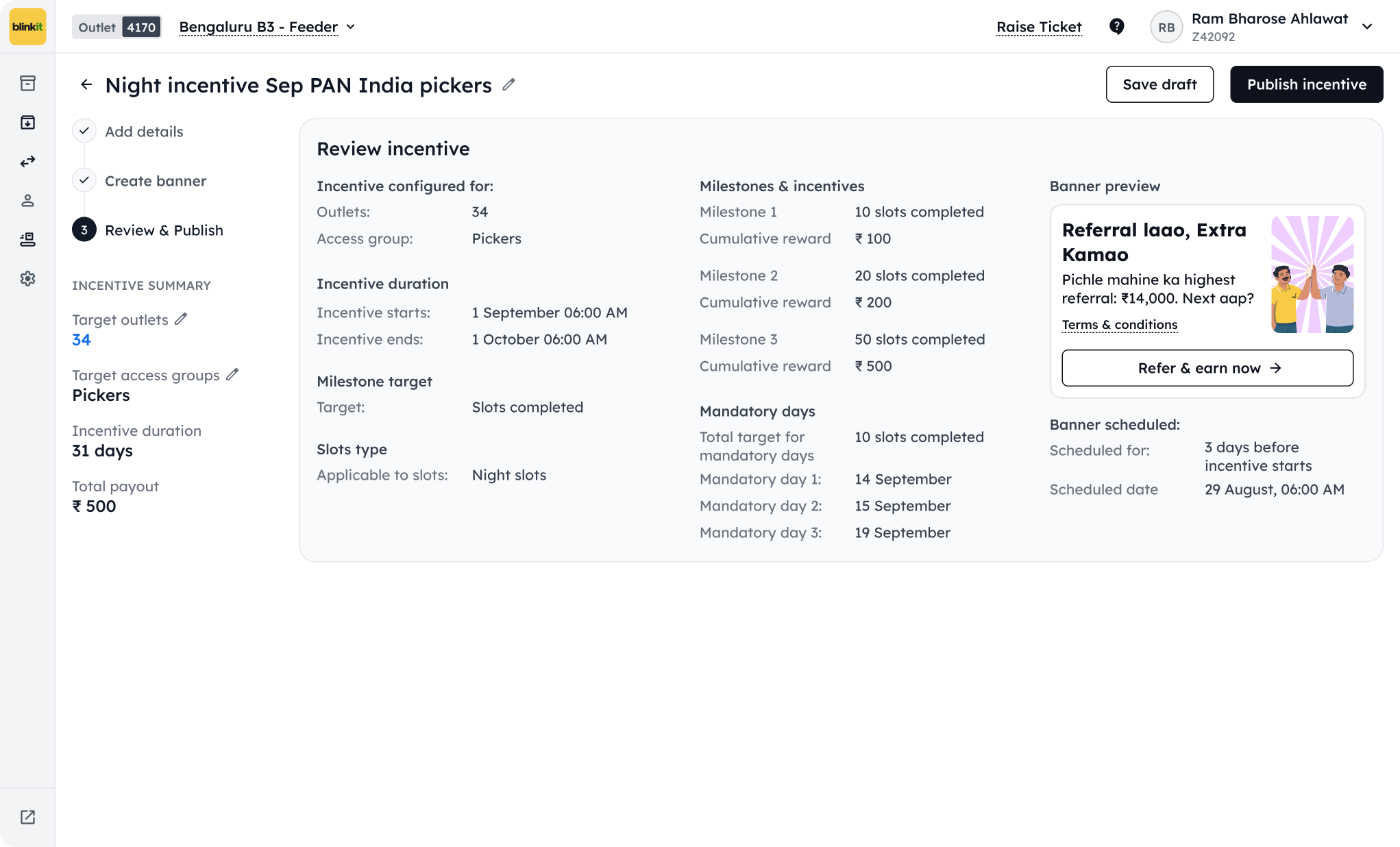
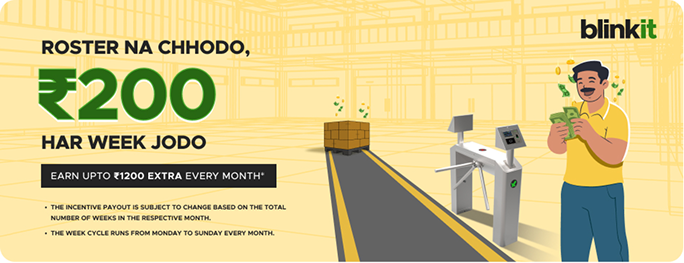
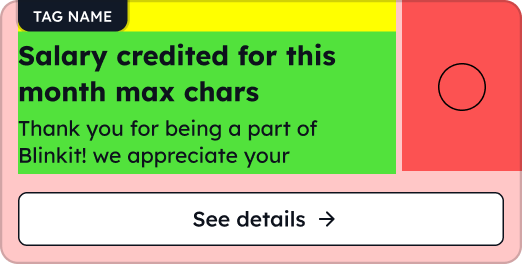
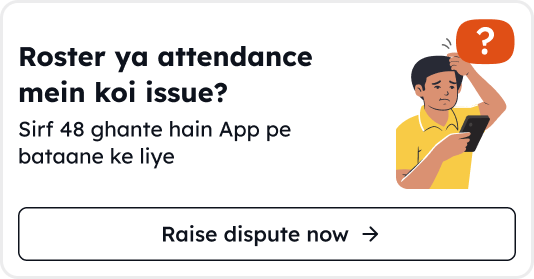
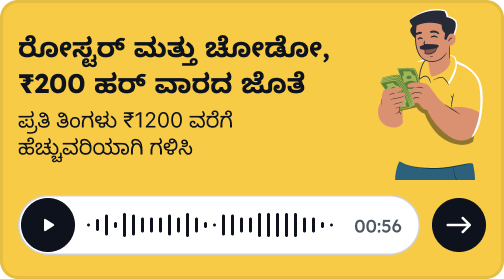
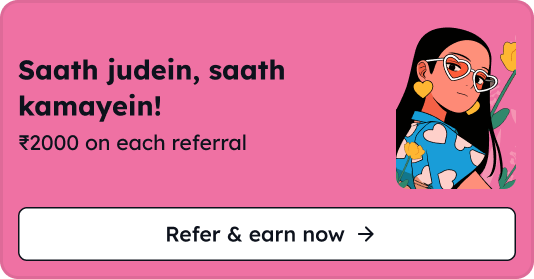
We also moved our banners from images to templates for scalability, reduced dependencies on broader team and multilingual support.
Original banner
New banner template
CTA options for banner

Banner samples
6. Outcome
Blinkit recently hit it’s all time high order count on
Rakshabandhan festival on 28 Aug.
99.8% adherance to roster
5 warehouses with incentives pilot rollout reported
99.8% adherance to roster for OD workers(pickers) for
offer duration of T-3 days from the festival.
0 truncation in supply
99.9% of the workers (pickers) met the required
performance levels resulting in 100% backend availability
and no truncation in supply due to worker unavailability.