When whales die and sink, the whale carcasses, or whale falls, provide a sudden, concentrated food source and a bonanza for organisms in the deep sea.
I experienced something similar with one of my projects which got shelved. This is the story of that whale project that sunk but helped many others in different ways.
A bit about the project
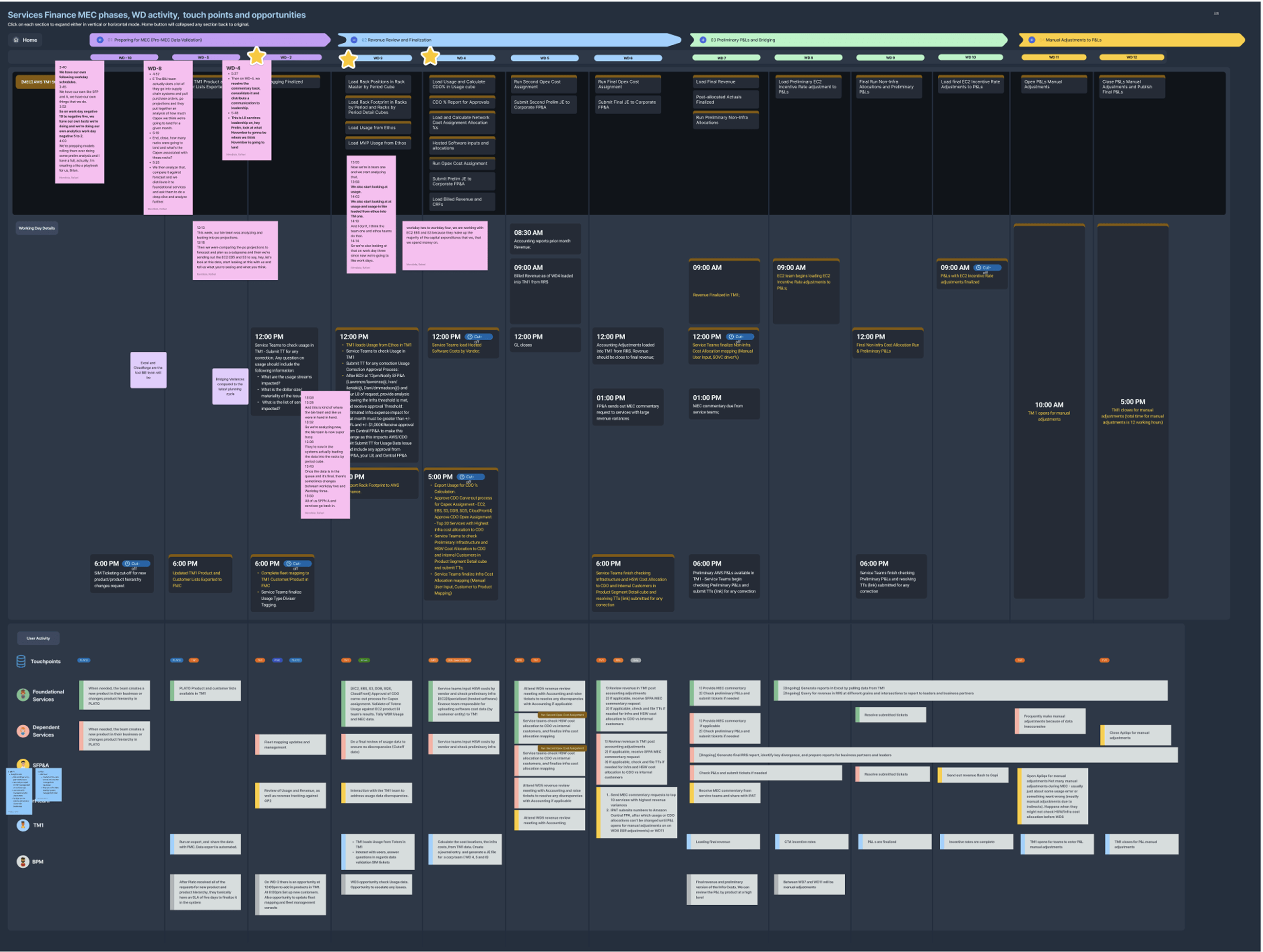
AWS operates at an annual run rate of $100 million, requiring robust tools for planning, monitoring, automation, and reporting. To manage this scale, AWS relies on a suite of 24+ in-house tools.
Currently, planning—one of the most critical processes—follows a bottom-up approach, involving multiple roles and taking up to two months for planning and leadership review. Additionally, challenges around transparency, a single source of truth, and recordkeeping further complicate the process.
To address these inefficiencies, the planning team proposed a financial toolkit that introduces a top-down approach. This would enable leadership to model various scenarios and establish guardrails, streamlining the planning process.
How it made an impact,
even after being shelved?
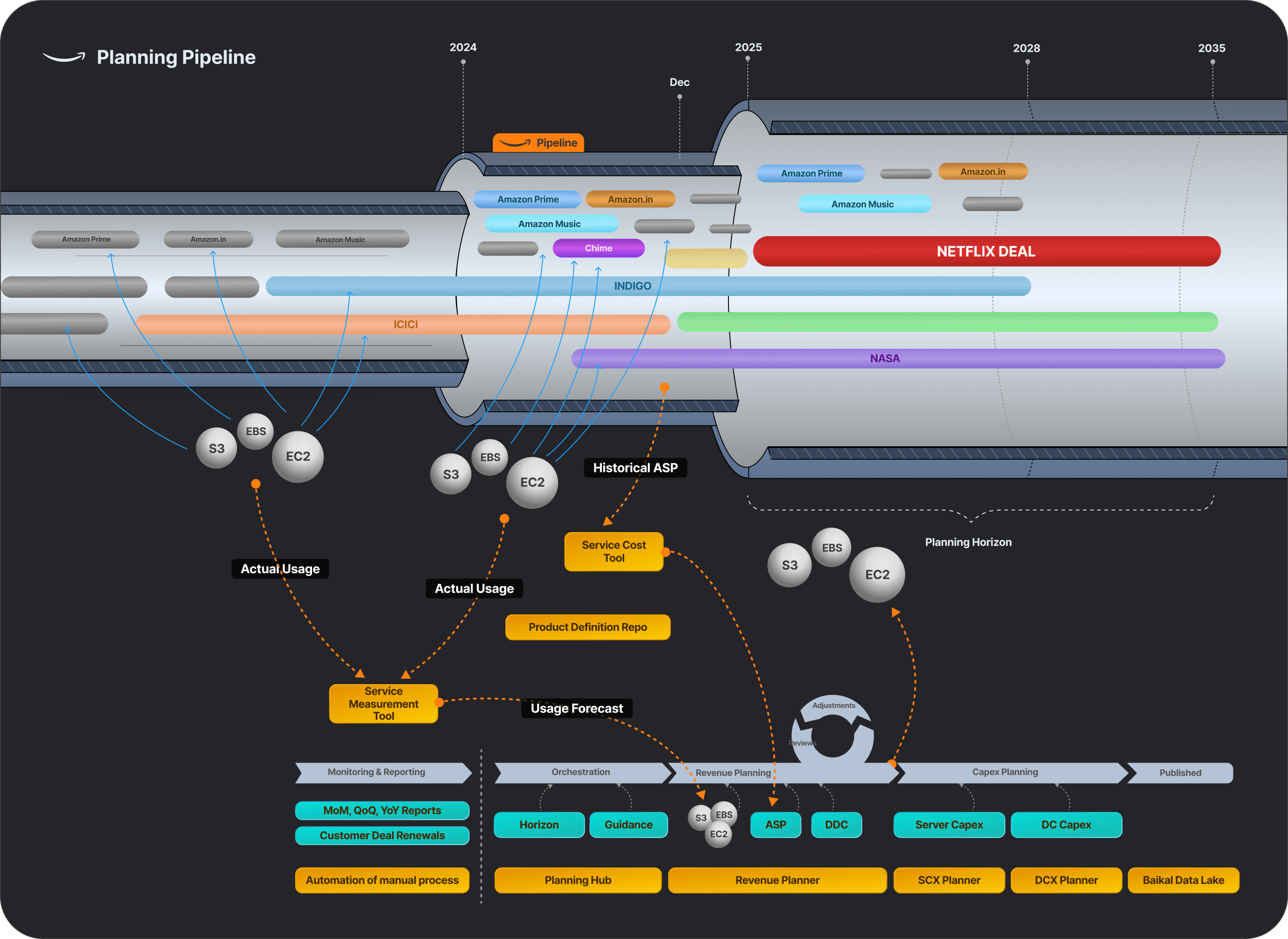
Onboarding guide explaining the AWS landscape and
planning process pipeline.
Contribution to Common Design System &
Common Patterns
- Grid interactions - Comments module, Cell history, Comparison module, Freeze
- Introduction of accessible design other than use of just colors to depict impact/change
- Visualization Patterns
Blueprint & Research Insights for Tops-Down Planning